2020 Toyota Highlander Owner’s Manual — Steps to take in an emergency
When trouble arises
If your vehicle needs to be towed
If towing is necessary, we recommend having your vehicle towed by your toyota dealer or commercial towing service, using a lift-type truck or flatbed truck.
Use a safety chain system for all towing, and abide by all state/ provincial and local laws.
2Wd models: if towing your vehicle with a wheel-lift type truck from the front, the vehicle's rear wheels and axles must be in good conditions. If they are damaged, use a towing dolly or flatbed truck.
Awd models: if towing your vehicle with a wheel-lift type truck, use a towing dolly.
Situations needs to contact dealers before towing
The following may indicate a problem with your transmission. Contact your toyota dealer or commercial towing service before towing.
- The engine is running but the vehicle will not move.
- The vehicle makes an abnormal sound.
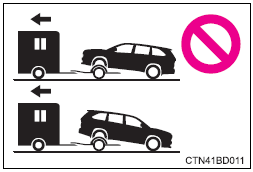
Towing with a sling-type truck
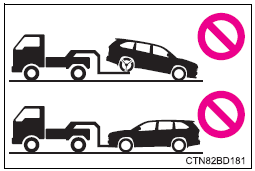
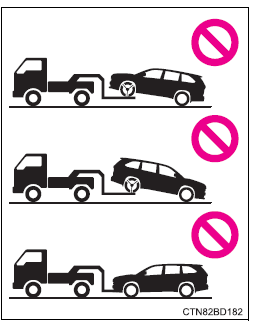
Do not tow with a sling-type truck to prevent body damage.
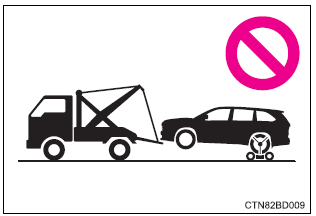
Towing with a wheel-lift type truck
- From the front (2wd models)
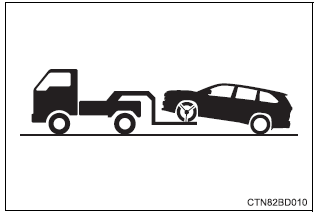
Release the parking brake.
- From the front (awd models)
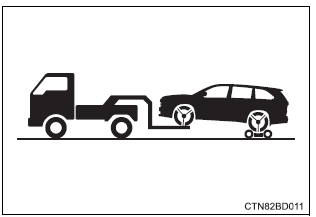
Use a towing dolly under the rear wheels.
- From the rear
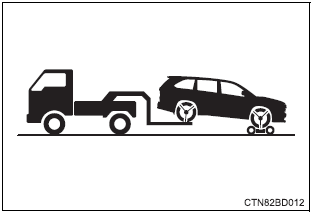
Use a towing dolly under the front wheels.
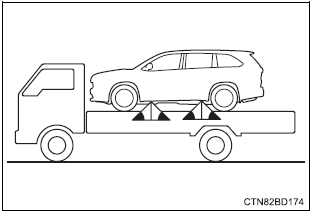
Using a flatbed truck
If your toyota is transported by a flatbed truck, it should be tied down at the locations shown in the illustration.
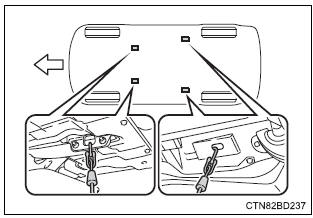
If you use chains or cables to tie down your vehicle, the angles shaded in black must be 45„a.
Do not overly tighten the tie downs or the vehicle may be damaged.
 Warning Warning
Failure to do so may result in death or serious injury. When towing the vehicle
2Wd models: be sure to transport the vehicle with the front wheels raised or with all four wheels raised off the ground. If the vehicle is towed with the front wheels contacting the ground, the drivetrain and related parts may be damaged.
Awd models: be sure to transport the vehicle with all four wheels raised off the ground. If the vehicle is towed with the tires contacting the ground, the drivetrain or related parts may be damaged, the vehicle may fly off the truck.
|
 Notice Notice
When raising the vehicle, ensure adequate ground clearance for towing at the opposite end of the raised vehicle. Without adequate clearance, the vehicle could be damaged while being towed. To prevent body damage when towing with a sling-type truck
Do not tow with a sling-type truck, either from the front or rear. Recreational towing (behind motor home, etc.)
Never dinghy tow your vehicle to prevent causing serious damage to the dynamic torque control awd system (awd models) and transmission.
|
If you think something is wrong
If you notice any of the following symptoms, your vehicle probably needs adjustment or repair. Contact your toyota dealer as soon as possible.
Visible symptoms
- Fluid leaks under the vehicle.
(Water dripping from the air conditioning after use is normal.)
- Flat-looking tires or uneven tire wear
- engine coolant temperature gauge needle continually points higher than normal.
Audible symptoms
- Changes in exhaust sound
- excessive tire squeal when cornering
- strange noises related to the suspension system
- pinging or other noises related to the engine
Operational symptoms
- Engine missing, stumbling or running roughly
- appreciable loss of power
- vehicle pulls heavily to one side when braking
- vehicle pulls heavily to one side when driving on a level road
- loss of brake effectiveness, spongy feeling, pedal almost touches the floor
Fuel pump shut off system
To minimize the risk of fuel leakage when the engine stalls or when an airbag inflates upon collision, the fuel pump shut off system stops the supply of fuel to the engine.
Follow the procedure below to restart the engine after the system is activated.
- vehicles without a smart key system
- turn the engine switch to the "acc" or "lock" position.
- Restart the engine.
- vehicles with a smart key system
- turn the engine switch to accessory mode or turn it off.
- Restart the engine.
 Notice Notice
Inspect the ground under the vehicle. If you find that fuel has leaked onto the ground, the fuel system has been damaged and is in need of repair. Do not restart the engine. |
If a warning light turns on or a warning buzzer sounds
Calmly perform the following actions if any of the warning lights comes on or flashes. If a light comes on or flashes, but then goes off, this does not necessarily indicate a malfunction in the system. However, if this continues to occur, have the vehicle inspected by your toyota dealer.
Warning light and warning buzzer list
|
Warning light
|
Warning light/details/actions
|
|
|
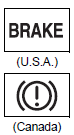
Brake system warning light (warning buzzer)*1
Indicates that:
This light also comes on when the parking brake is not released. If the light turns off after the parking brake is fully released the system is operating normally. → Immediately stop the vehicle in a safe place and contact your toyota dealer. Continuing to drive the vehicle may be dangerous. |
 |
Charging system warning light*2
Indicates a malfunction in the vehicle's charging system → immediately stop the vehicle in a safe place and contact your toyota dealer. |
 |
Low engine oil pressure warning light (warning buzzer)*2
IOndicates that the engine oil pressure is too low. → Immediately stop the vehicle in a safe place and contact your toyota dealer. |
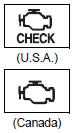 |
Malfunction indicator lamp
Indicates a malfunction in:
→ Have the vehicle inspected by your toyota dealer immediately. |
 |
Srs warning light
Indicates a malfunction in:
→ have the vehicle inspected by your toyota dealer immediately. |
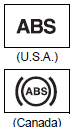 |
Abs warning light
Indicates a malfunction in:
→ have the vehicle inspected by your toyota dealer immediately. |
 |
Electric power steering system warning light (warning buzzer)
Indicates a malfunction in the eps (electric power steering) system → have the vehicle inspected by your toyota dealer immediately. |
 |
Pre-collision system warning light*3, 4
Indicates a malfunction in the pcs (pre-collision system) the warning light will operate as follows, even when the system is not malfunctioning:
→ Have the vehicle inspected by your toyota dealer immediately. |
 |
Slip indicator
indicates a malfunction in:
The light will flash when the vsc or the trac system is operating. → Have the vehicle inspected by your toyota dealer immediately. |
 |
Open door warning light (warning buzzer)*2, 5
Indicates that one or more of the doors, the back door or the glass hatch*4 is not fully closed → check that all the doors, the back door and the glass hatch*4 are closed. |
 |
Low fuel level warning light
Iindicates that remaining fuel is approximately 2.9 Gal. (10.7 L, 2.4 Imp. Gal.) Or less → refuel the vehicle. |
 |
Seat belt reminder light (warning buzzer)*6
Warns the driver and/or front passenger to fasten their seat belts → fasten the seat belt. If the front passenger's seat is occupied, the front passenger's seat belt also needs to be fastened to make the warning light (warning buzzer) turn off. |
 |
Master warning light
A buzzer sounds and the warning light comes on and flashes to indicate that the master warning system has detected a malfunction. → P. 572 |
 |
Tire pressure warning light
When the light comes on: low tire inflation pressure such as
→ Adjust the tire inflation pressure (including the full-size spare tire) to the specified level. The light will turn off after a few minutes. In case the light does not turn off even if the tire inflation pressure is adjusted, have the system checked by your toyota dealer. When the light comes on after blinking for 1 minute: malfunction in the tire pressure warning system → Have the system checked by your toyota dealer. |
*1: Parking brake engaged warning buzzer:
*2: Vehicles with monochrome display *3: vehicles with color display *4: if equipped
*5: open door warning buzzer:
*6: Driver's seat belt buzzer:
Vehicles without a smart key system: the driver's seat belt buzzer sounds to alert the driver that his or her seat belt is not fastened. Once the engine switch is turned to the "on" position, the buzzer sounds for 6 seconds. If the vehicle reaches a speed of 12 mph (20 km/h), the buzzer sounds once.
If the seat belt is still unfastened after 25 seconds, the buzzer will sound intermittently for 10 seconds. Then, if the seat belt is still unfastened, the buzzer will sound in a different tone for 20 more seconds.
Vehicles with a smart key system: the driver's seat belt buzzer sounds to alert the driver that his or her seat belt is not fastened. Once the engine switch is turned to ignition on mode, the buzzer sounds for 6 seconds.
If the vehicle reaches a speed of 12 mph (20 km/h), the buzzer sounds once. If the seat belt is still unfastened after 25 seconds, the buzzer will sound intermittently for 10 seconds. Then, if the seat belt is still unfastened, the buzzer will sound in a different tone for 20 more seconds.
Front passenger's seat belt buzzer: the front passenger's seat belt buzzer sounds to alert the front passenger that his or her seat belt is not fastened. The buzzer sounds once if the vehicle reaches a speed of 12 mph (20 km/h). If the seat belt is still unfastened after 25 seconds, the buzzer will sound intermittently for 10 seconds.
Then, if the seat belt is still unfastened, the buzzer will sound in a different tone for 20 more seconds.
Srs warning light
This warning light system monitors the airbag sensor assembly, front impact sensors, side impact sensors (front door), side impact sensors (rear), driver¢¦s seat position sensor, driver¢¦s seat belt buckle switch, front passenger occupant classification system (ecu and sensors), "air bag on" indicator light, "air bag off" indicator light, front passenger¢¦s seat belt buckle switch, driver¢¦s seat belt pretensioner, front passenger¢¦s seat belt pretensioner and force limiter, airbags, interconnecting wiring and power sources.
Front passenger detection sensor, seat belt reminder and warning buzzer
If luggage is placed on the front passenger seat, the front passenger detection sensor may cause the warning light to flash and the warning buzzer to sound even if a passenger is not sitting in the seat.
If the malfunction indicator lamp comes on while driving
First check the following:
- is the fuel tank empty? If it is, fill the fuel tank immediately.
- Is the fuel tank cap loose? If it is, tighten it securely.
The light will go off after several driving trips.
If the light does not go off even after several trips, contact your toyota dealer as soon as possible.
Electric power steering system warning light (warning buzzer)
When the battery charge becomes insufficient or the voltage temporarily drops, the electric power steering system warning light may come on and the warning buzzer may sound.
When the tire pressure warning light comes on
Check the tire inflation pressure and adjust to the appropriate level. Pushing the tire pressure warning reset switch will not turn off the tire pressure warning light.
The tire pressure warning light may come on due to natural causes
The tire pressure warning light may come on due to natural causes such as natural air leaks and tire inflation pressure changes caused by temperature.
In this case, adjusting the tire inflation pressure will turn off the warning light (after a few minutes).
When a tire is replaced with a spare tire
- Vehicles with a compact spare tire
The compact spare tire is not equipped with a tire pressure warning valve and transmitter. If a tire goes flat, the tire pressure warning light will not turn off even though the flat tire has been replaced with the spare tire.
Replace the spare tire with the repaired tire and adjust the tire inflation pressure. The tire pressure warning light will go off after a few minutes.
Vehicles with a full-size spare tire
The spare tire is also equipped with the tire pressure warning valve and transmitter. The tire pressure warning light will turn on if the tire inflation pressure of the spare tire is low. If a tire goes flat, even though the flat tire is replaced with the spare tire, the tire pressure warning light does not turn off. Replace the spare tire with the repaired tire and adjust to the proper tire inflation pressure. The tire pressure warning light will turn off after a few minutes.
Conditions that the tire pressure warning system may not function properly
If the tire pressure warning light frequently comes on after blinking for 1 minute
If the tire pressure warning light frequently comes on after blinking for 1 minute when the engine switch is turned on, have it checked by your toyota dealer.
Customization that can be configured at toyota dealer
The vehicle speed linked seat belt reminder buzzer can be disabled.
(Customizable features ) However, toyota recommends that the seat belt reminder buzzer be operational to alert the driver and front passenger when seat belts are not fastened.
Warning buzzer
In some cases, the buzzer may not be heard because of noisy place or an audio sound.
 Warning Warning
Stop your vehicle in a safe place immediately and contact your toyota dealer. The vehicle will become extremely unstable during braking, and the abs system may fail, which could cause an accident resulting in death or serious injury. When the electric power steering system warning light comes on
The steering wheel may become extremely heavy. If the steering wheel becomes heavier than usual when operating, hold firmly and operate using more force than usual. If the tire pressure warning light comes on
Be sure to observe the following precautions. Failure to do so could cause a loss of vehicle control and result in death or serious injury.
If a blowout or sudden air leakage should occur
The tire pressure warning system may not activate immediately. Maintenance of the tires
Each tire, including the spare (if provided), should be checked monthly when cold and inflated to the inflation pressure recommended by the vehicle manufacturer on the vehicle placard or tire inflation pressure label (tire and load information label). (If your vehicle has tires of a different size than the size indicated on the vehicle placard or tire inflation pressure label [tire and load information label], you should determine the proper tire inflation pressure for those tires.) As an added safety feature, your vehicle has been equipped with a tire pressure monitoring system (tpms-tire pressure warning system) that illuminates a low tire pressure telltale (tire pressure warning light) when one or more of your tires is significantly under-inflated. Accordingly, when the low tire pressure telltale (tire pressure warning light) illuminates, you should stop and check your tires as soon as possible, and inflate them to the proper pressure. Driving on a significantly underinflated tire causes the tire to overheat and can lead to tire failure. Under-inflation also reduces fuel efficiency and tire tread life, and may affect the vehicle’s handling and stopping ability. Please note that the tpms (tire pressure warning system) is not a substitute for proper tire maintenance, and it is the driver’s responsibility to maintain correct tire pressure, even if under-inflation has not reached the level to trigger illumination of the tpms low tire pressure telltale (tire pressure warning light). Your vehicle has also been equipped with a tpms (tire pressure warning system) malfunction indicator to indicate when the system is not operating properly. The tpms (tire pressure warning system) malfunction indicator is combined with the low tire pressure telltale (tire pressure warning light). When the system detects a malfunction, the telltale will flash for approximately one minute and then remain continuously illuminated. This sequence will continue upon subsequent vehicle start-ups as long as the malfunction exists. When the malfunction indicator is illuminated, the system may not be able to detect or signal low tire pressure as intended. Tpms (tire pressure warning system) malfunctions may occur for a variety of reasons, including the installation of replacement or alternate tires or wheels on the vehicle that prevent the tpms (tire pressure warning system) from functioning properly. Always check the tpms (tire pressure warning system) malfunction telltale after replacing one or more tires or wheels on your vehicle to ensure that the replacement or alternate tires and wheels allow the tpms (tire pressure warning system) to continue to function properly. |
 Notice Notice
Do not install tires with different specifications or makers, as the tire pressure warning system may not operate properly. |
If a warning message is displayed
If a warning message is shown on the multi-information display, stay calm and perform the following actions:
- Master warning light the master warning light also comes on or flashes in order to indicate that a message is currently being displayed on the multiinformation display.
- Multi-information display
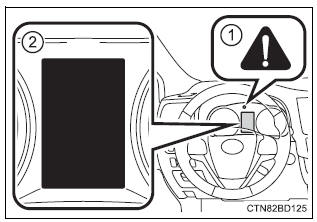
If any of the warning message or indicator comes on again after the following actions have been performed, contact your toyota dealer.
Stored owner’s manualImported HTML from the shared Autotk manuals tables. Not an official Toyota site.